

In 2024, a controversial book appeared challenging fifty years of supply chain orthodoxy.
A Manufacturing-to-Market (M2M) Framework: Linking Manufacturing, Distribution, and Commercial Growth he argues that distribution networks, long considered conduits for global trade, are actually their own underutilized intelligence system. Distributors see shifts in demand before headquarters do. Marketers see changing buying patterns before quarterly reports are produced. Yet in many manufacturing organizations, that information arrives at the production planning table very late, if at all.
The letter’s directive is straightforward: regional sales data should flow back to production planning in compressed timelines, weekly or daily, instead of appearing in the next quarterly update. Its analysis of semiconductor shortages for 2021 to 2023 makes the stakes stronger. When automotive chip demand collapsed at the beginning of the pandemic while consumer electronics demand rose, manufacturers with advanced manufacturing skills were unable to resupply because purchasing, planning, and marketing forecasting work on cut-off timelines. The book includes the episode as an example of what its author says is the structural delay, the delay between the recognition of the market signal and the operational response, and finds failure in organizational structure rather than technical ability. That treatment of distribution as an intellectual activity distinguishes the framework from the standard supply chain literature, which tends to emphasize cost reduction and speed of delivery over market responsiveness.
The author is Kamran Pitafi, a regional business leader with over 23 years of experience in consumer electronics across the Middle East and Africa. And the framework is not a theory he came across in the library. It is the reduction of functions used that is responsible for the failure described in the book.
Companion Methodology: D2C X
The M2M Framework describes how information should flow between markets and industries. His second line of work, a structured methodology known as D2C X, or Direct to Consumer Excellence, addresses what organizations should do with it.
Rather than focusing solely on direct sales channels, D2C X emphasizes the use of customer demand as input for manufacturing operations, inventory management, and supply chain planning. It encourages companies to base production decisions on current purchasing behavior instead of historical measurements alone, to place inventory where needed, and to reduce the organizational distance between people who understand customers and people responsible for production decisions. He developed an approach specifically aimed at complex emerging markets, where diverse distribution networks and rapidly changing consumer preferences defeat traditional forecasting models, and whose emphasis falls on organizational planning and rapid decision cycles rather than technology investments alone.
Independent research points in the same direction. A 2022 Boston Consulting Group study found that manufacturers who adopt integrated planning processes improve forecast accuracy and reduce excess inventory. Together, the M2M Framework and D2C X present a systematic way to integrate production, distribution, and commercial decision-making. Rather than stemming from academic research alone, both bodies are based on more than two decades of senior leadership across the international consumer electronics market.
The Work Behind the Ideas
That accountability began in December 2005, when Pitafi joined LG Electronics as a Planning and Management Officer. It was on the field that he found his footing. Within two years he progressed through the roles of Area Sales Executive and Senior Sales Executive, building distribution networks across Kenya, Tanzania, Uganda, Congo, and Ethiopia, markets where infrastructure gaps, regulatory complexity, and financial volatility gave book forecasting models little to work with. In 2008, he moved to Dubai as the Assistant Manager of consumer electronics across Iraq, Pakistan, and the UAE wholesale division, achieving a promotion to Sales and Marketing Manager in 2010 and, in 2012, to Senior Manager and Team Leader covering strategic markets including Iraq, Jordan, Syria, Yemen, and Pakistan, few of them are places where the day-to-day commercial planning converged.
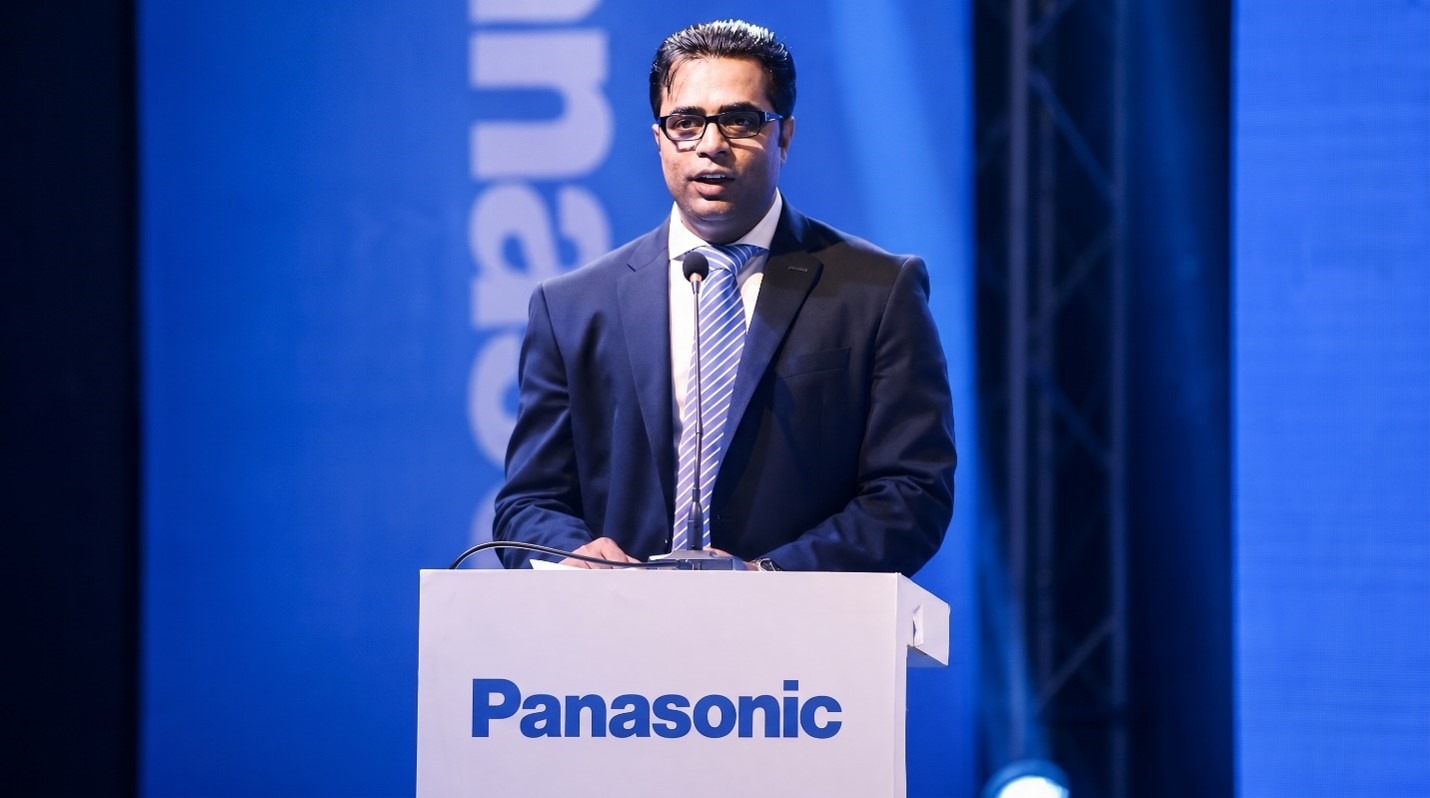
In April 2016, he joined Panasonic as the Deputy General Manager of Consumer Sales and Marketing for the Middle East Division. Within about eighteen months, he was promoted to the position of General Manager and Head of the Middle East and Africa Division, a position he held from September 2017 to March 2026. Based in Dubai and reporting directly to the regional headquarters, he held overall profit and loss responsibility for multinational operations with an annual revenue portfolio in excess of $45 million. In that role, he led cross-cultural teams across sales, marketing, logistics, and customer service, managing distributor networks across markets with varying levels of infrastructure maturity, advanced local manufacturing systems, and balanced global product standards with local operations in various regulatory and commercial areas.
By his departure in March 2026, Pitafi had accumulated more than nineteen years of commercial leadership experience across LG Electronics and Panasonic, overseeing operations in some of the world’s most complex consumer electronics markets. The practical lessons developed throughout that time later became the basis for both the M2M Framework and the D2C X approach.
Carrying the Playbook to the next generation
Beyond the corporate boardroom, Pitafi has focused on imparting the principles behind his M2M Framework and D2C X approach to the next generation of entrepreneurs and business leaders. His effective methods of merchandising, distribution strategy, manufacturing relationships, and demand response planning are now impacting start-ups and growing businesses across Pakistan and the Middle East through his innovative consulting work. As part of his commitment to giving back to the business community, he mentors founders at organizations including Plan9, BNU Innovatrium, and the National Incubation Center Lahore. Working with emerging companies, he helps founders create agile business strategies, strengthen supply chain capabilities, establish manufacturing relationships, and develop distribution models capable of supporting long-term growth. By translating lessons learned from more than two decades of executive leadership into practical guidance, he helps emerging businesses face many of the same operational challenges that established manufacturers face.
Why Ideas Go
For half a century, the ideas that shaped global production flowed one way or the other: from business schools and consulting firms in the West to markets in the Middle East, Africa and South Asia. Those markets were theoretical areas, rarely their sources.
That is changing, because conditions that markets have never had the luxury of ignoring, volatile demand, fragmented distribution, and forecasts that break out of touch with reality, are now conditions everywhere. Users who spend their careers managing find their hard-earned playbooks universally valuable, and Pitafi’s two frameworks represent that shift in the written form. The best export of his career may not be the products he has moved across three continents, but the working knowledge of how he moved them.