
Canva AI 2.0 brings agent-based, automated features to power the end-to-end design process

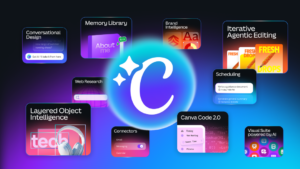
VISUAL COMMUNICATION platform Canva has launched Canva AI 2.0, a new suite of tools that uses agent-based artificial intelligence to redefine the creative process through conversational design.
Unveiled at the Canva Create 2026 event in Los Angeles on April 16, Canva AI 2.0 marks its transition from a design environment with AI tools to an AI environment with design tools, said Cliff Obrecht, Canva’s CEO, in an online forum last week.
He said the use of Canva AI has tripled in the past year.
The platform now has more than 265 million monthly users and more than 31 million paid users, he added. Annual revenue reached $4 billion, with $500 million coming from its business-to-business segment.
Melanie Perkins, Canva’s chief executive, said in the same forum that the new suite, which marks its “biggest launch ever,” makes Canva a true creative partner with “AI that creates with you.”
Canva AI 2.0 — initially launching as a research preview, with expanded access to more users in the coming weeks — transforms Canva into a conversational, agent-based platform that can act on ideas through information.
With its new architectural layer, it incorporates conversational design, allowing users to use text or voice input to describe what they want to create.
Meanwhile, with agency orchestration, creatives can turn a single piece of information into an entire campaign and even outsource jobs.
“It understands your purpose, selects the right tools, and combines them to create everything you need, in every format. Ask it to ‘create a multi-channel campaign plan to launch our latest summer products,’ and it will produce everything, ready for refinement or publication.”
Object-based intelligence also allows users to generate fully layered and editable designs, enabling them to edit individual elements without starting over or changing the entire design.
It also has a living memory that learns from user or group designs to adapt to their style and preferences over time.
“With continuous memory, Canva AI understands how you work, keeps every project on brand, automatically applies your style, and evolves over time. It learns from your work and adapts to you and your team’s preferences and goals, becoming more useful in every use. Personalize it with your existing designs to generate a custom library and ‘About Me’ profile that continuously matches your experience.”
WORKS
Canva AI 2.0 also features a new intelligent workflow.
Connectors allow users to connect content from all other applications and tools to Canva AI.
“Connect tools like Slack, Gmail, Google Drive, and Calendar, and Canva AI can draw on your conversations, content, and schedule to create exactly what you need. Generate meeting summaries from Zoom recordings, turn customer emails into personalized sales pitches, or create company newsletters based on activity across Slack,” it says.
Initial connectors include Slack, Notion, Zoom, Gmail, Google Drive, and Google Calendar.
Meanwhile, by programming, users can set tasks that Canva AI can run automatically in the background, even when you’re offline. This includes generating social content or creating daily notification documents via emails or calendars.
Web research also delivers information, including news and market research, on demand through the platform.
With product intelligence, Canva AI ensures that every design produced stays in the product.
“Just plug in your data or describe what you need, and Canva AI automatically applies your fonts, colors, and style to every design. You can also quickly update existing work by asking Canva AI to run your latest product, turning hours of manual revision into a single step done in seconds.”
For its part, the updated Canva Code 2.0 brings HTML import to the platform.
“From there, everything happens in one place. Add forms that collect responses to Canva Sheets, put interactive elements into presentations, or publish to your own domain…”
Meanwhile, Canva also announced that it has deepened its partnership with Anthropic to bring its Design Engine and Visual Suite directly to Claude.
“As AI reshapes the way content is created, leading platforms including Canva help users move from drafts to fully editable, structured, and analytical work.” – Bettina V. Roc



