
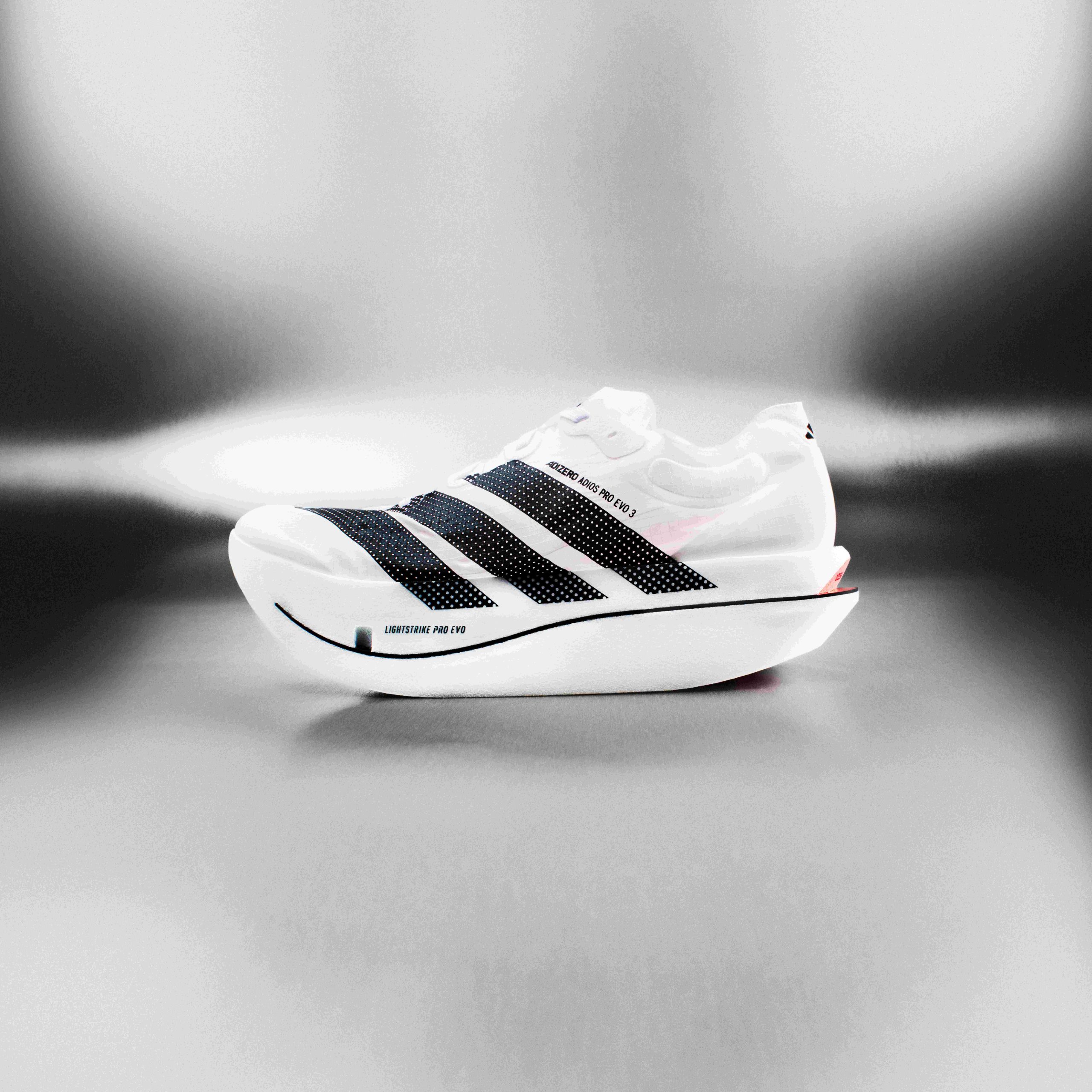
Adidas won the biggest running title in running: the first official marathon under two hours, organized by Sabastian Sawe in London wearing Adizero Adios Pro Evo 3. Stocks rose approx 2% on Monday after the result. The trade question is difficult. Could the shoe’s worldwide record give Adidas more pricing power at a time when consumers are under pressure and investors still worry about tariffs, geopolitics and weak consumer demand?
Sports success is obvious. Sawe ran 1:59:30, breaking Kelvin Kiptum’s previous world record of 2:00:35. Tigst Assefa of Ethiopia also set a women’s only world record with the same shoe. But the financial interest is always less in the stopwatch than what Adidas can do with the result. It beat Nike in the first officially recognized sub-two hour race, and it did it with a product priced at around $500. That’s well above the typical range of the mainstream shoe market, where most flagship models sit around $250 to $300, while Nike’s Alphafly 3 costs $285 to $295 and Adidas’s own Adios Pro 4 is around $250. The Evo 3 isn’t just premium. It costs more than even most serious runners would consider paying.
That’s important because Evo 3 isn’t asked to run a business just by selling units. It exists to adjust the economy of scope around it. Adidas says the shoe weighs 97 grams, about 30% lighter than its predecessor, and improves running economy by 1.6%. The company says it uses Lightstrike Pro Evo foam and its ENERGYRIM construction. Those details are important because the point is not just to sell the most expensive shoe. It’s to make the whole Adizero family feel fast, unique and worth paying for.
That’s the best-case version of economics. The fastest shoe in the world can attract the attention of a wide range of brands, especially in running, where serious consumers care about who the elite athletes are running. If Adidas can turn that into strong demand for lower-priced Adizero models, the London result could help protect pricing and improve product mix in a business segment where technical reliability carries unusual weight.
The problem is that halo effects don’t remove group level pressure. Adidas entered this moment with a huge concern that is already hanging in the stock. Earlier this year the company warned that the tariffs could reduce operating profit by around 400 million euros, and shares fell after management disappointed investors with its outlook. Even after Monday’s rally, the stock remained below where it started the year. So the market is giving Adidas credit for the brand’s biggest win without pretending that a single running shoe is changing the broader revenue picture.
That’s the part investors need to understand. A record can strengthen a brand. It does not automatically confirm the annual income statement. The Evo 3 is expensive enough that it will remain out of reach for most runners, and its limited edition underlines that. For a business the size of Adidas, the real value lies in whether the record helps change demand, prices and perception in a broader operating line. If it does, the shoe has a commercial value beyond its sales. Otherwise, the record remains a notable title linked to a niche product.
There is also consumer tension here which makes winning more difficult. Adidas just proved they can make the fastest official marathon shoe in history. At the same time, it tries to sell that story in a market where many consumers are becoming more price sensitive, not less. The company may have won the battle for Nike’s popularity, but it still has to convert that popularity into purchases at prices people will tolerate. That is more difficult than winning the race.
Nike’s long public pursuit of the sub-second barrier gives the moment more weight. For years, Nike has owned the narrative of marathon innovation, from Breaking2 to Eliud Kipchoge’s recent sub-two attempt outside of the official race rules. Adidas now has a record in the books. In terms of brand names, that’s a real change. In financial terms, it’s only useful if the company can use that margin to prop up margins and turn the operating division into just another downsizing battleground.
That is a clear way to read the London result. Adidas scored a historic win and an important premium signal over Nike. The following is not fancy and very important. The company has to show that the fastest shoe in the world can do more than gather headlines. It should help support prices in a market where even dedicated runners might look at a $500 shoe and conclude that the line between aspirational and extreme has become too wide.
More from Finance Monthly: Blackstone Raises $70bn as Returns Fall. That Should Concern Investors