
May 6, Samsung OTCMKTS: SSNLF made history when the South Korean multinational tech conglomerate surpassed a market capitalization of $1 trillion.
In doing so, the company became the second Asian company to do so, after Taiwan Semiconductor Manufacturing Company. NYSE: TSM.
As the case tends to be in 2026, Samsung is quickly embracing artificial intelligence (AI) to their credit. Amid the world’s AI-driven memory chip shortage, Samsung shares have more than doubled in the year to date and more than quadrupled in the past year. To put those gains in context, Samsung’s market cap has already risen to $1.2 trillion.
Galaxy Phones Are Popular, But Not Why Samsung Works
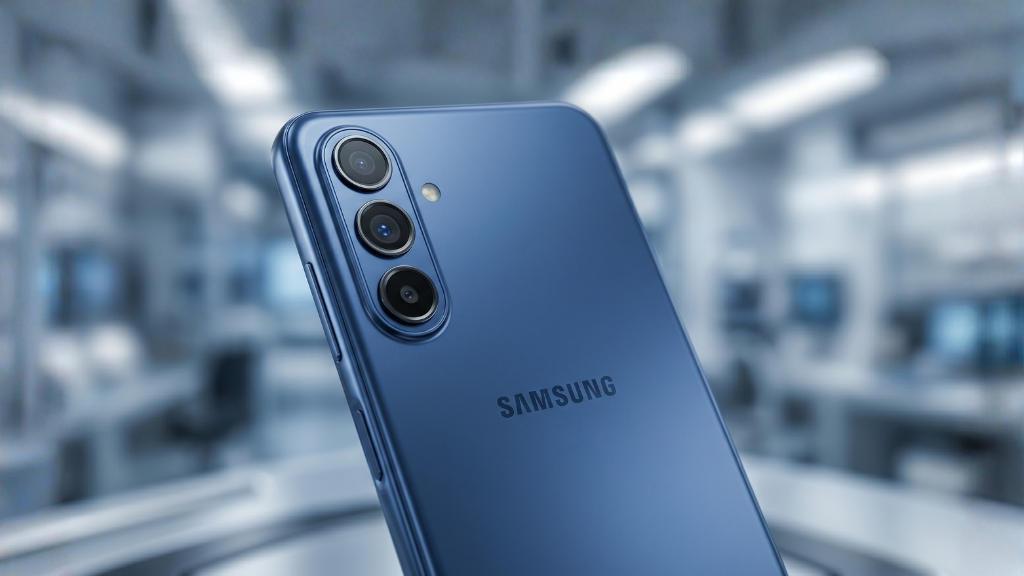
As of Q1 2026, the Samsung Galaxy A07 4G is the best-selling Android smartphone in the world. In fact, in the list of the 10 best-selling smartphones in the world, the Samsung Galaxy series claims all the top spots not occupied by iPhones.
By 2025, the company’s Mobile Experience (MX) and Network divisions—formerly its IT & Mobile Communications division—enjoyed a 22% year-over-year (YOY) increase in annual operating profit, reaching nearly $9.04 billion. That significant YOY growth was driven by strong sales of its smartphone products, including the Galaxy S25 and foldable phones.
As successful as the company has been in that space, its MX and Network businesses were not the main driver that caused it to break the $1 trillion market barrier. Instead, it was a continuous, large demand for high-bandwidth memory (HBM) and random access memory (DRAM).
Samsung is one of the top traditional suppliers of HBM and DRAM. As of early 2026, the company has begun mass production and shipping of the upgraded HBM4—its sixth-generation, high-performance chip—with plans to continue scaling production to meet the growing demand for AI systems.
Memory Chip Oligopoly: Samsung Is a Key Part of the Global Trifecta
The demand for HBM and DRAM has caused a huge shortage, which is currently only managed by three companies. Samsung, SK Hynix and Micron Technology NASDAQ: MU provide approximately 95% of the world’s supply of memory chips.
And even though it’s only May, according to all three companies, their production capacity for the whole year is already running out. This is fueling a historic supply-demand gap, with those companies able to charge a premium for their products.
That deficit is expected to continue through at least 2027, and some estimates predict it will continue until 2030. According to Grand View Research, the global semiconductor memory market is expected to reach more than $240 billion after experiencing a compound annual growth rate of 11.6% from 2024 to 2030. Furthermore, the demand for AI will continue beyond DRAM. smartphones, laptops, game consoles, smart home devices, and the “increasing integration of electronic components in cars and the continuous development of automotive systems.”
The industry consultancy notes that the market is highly competitive, highlighting in its report that Samsung is one of the few “key players”.
After Triple-Digit Profits, Is Samsung Still a Buy?
Analyst sentiment on Samsung remains generally positive, with the company maintaining a consensus buy rating.
In its Q1 2026 earnings report, Samsung’s price-to-earnings (P/E) ratio improved from a trailing 12-month P/E of 52.24 to a forward P/E of 44.73. Meanwhile, with a current beta of 0.88, the stock is less volatile than the broader market and certainly more volatile than other companies in the space.
Micron, for example, currently has a beta of 1.91, making it nearly twice as strong as the broader market and 117% stronger than Samsung.
Roundhill Memory ETF today
Roundhill Memory ETF
As of 05/15/2026 04:10 PM Eastern
- 52 week interval
- $26.14
▼
$56.38
- Assets Under Administration
- $9.98 billion
In Q1, the company posted records for quarterly revenue and operating profit, with the Semiconductor business unit seeing quarter-over-quarter sales growth of 86%. The company announced that it expects to deliver the first HBM4E samples in Q2, specifically noting that management expects “agent AI to accelerate demand growth. [throughout H2].”
For investors looking for an alternative way to gain exposure to Samsung—and the memory chip shortage—with the Roundhill Memory ETF. BATS: DRAMa fund launched in April aimed at providing targeted exposure.
With a weight of almost 20%, Samsung is the second largest DRAM company. Since its launch last month, the ETF has gained more than 96%.
Before you consider Samsung Electronics, you’ll want to hear this.
MarketBeat tracks Wall Street’s top and most effective research analysts and the stocks they recommend to their clients every day. MarketBeat identified five stocks that top analysts are quietly whispering to their clients to buy now before the broader market catches on… and Samsung Electronics wasn’t on the list.
Although Samsung Electronics currently has a buy rating among analysts, top analysts believe these five stocks are the best.
View Five Stocks Here
Learn the basics of option trading and how to use them to improve returns and manage risk with this free report from MarketBeat. Click the link below to get your free copy.
Get This Free Report