
US Court Ruling May Reset Remote Work as Employers Push Workers Back to Offices

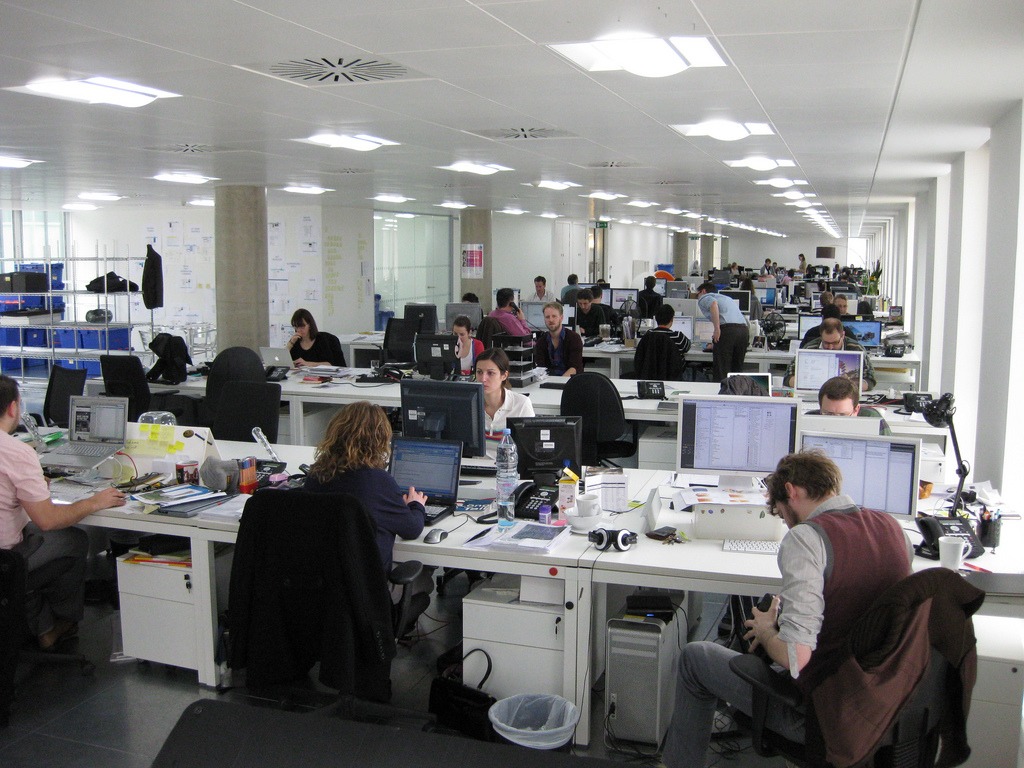
Millions of office workers are rebuilding their lives at work long after the pandemic, believing that flexibility has become a permanent part of modern jobs. A new US court decision is now expected to strengthen employers who send workers back to the office, ruling one of the most emotional labor battles in the post-COVID economy.
In a decision that can affect workplace policies in more than one company, i Fifth Circuit Court of Appeals ruled that full-time remote work is “rarely a reasonable accommodation” under the Americans with Disabilities Act (ADA), upholding an employer who refused to allow an employee to live remotely after the end of the COVID-19 policies.
The case involved Albert Hayes, an IT systems director employed by government contractor GStek Inc. Hayes had been working remotely during the pandemic before being ordered to return to the office in 2022. After being diagnosed with autism, depression and social anxiety disorder, she requested permanent telework as a disability accommodation.
His employer instead offered a mixed plan. Hayes said the office environment creates a lot of mental health stress and said she can only do her part at home. GStek cut him off soon after.
The court sided with the company, ruling that physical presence remains an important part of work and warned that “the COVID pandemic has not changed the fact that in-person work is considered an essential part of many jobs.” The judges also accepted the arguments that the supervision, communication and expectations of the customers are justified for the workers to come back in person.
The decision does not eliminate remote accommodations under the ADA, and employers must still evaluate individual applications. But the decision reinforces the argument that physical attendance can still be important in many jobs, especially in industries tied to government contracts, security or direct oversight.
For many workers, remote work has ceased to be a convenience over the years and has instead become part of how they cope with rising living costs, mental health pressures and family responsibilities. Parents rearranged childcare around it, workers moved from expensive cities and some workers with anxiety, chronic illness or emotional challenges quietly rebuilt processes that made work manageable again.
Others have used telecommuting to hold on to jobs while balancing inflation, elder care and long commutes that just don’t make sense financially. Now many of those provisions are being rolled back at the same time, the most unsettled parts of white-collar America and leaving the workers who got used to it during the pandemic with the feeling that the rules have changed twice in less than five years – first to flexibility, and then back to the control of the office.
Not all employees wanted to live forever, but many built their finances and processes around ongoing flexibility. The loss of that forecast now comes at odds with a weak hiring market and growing fears about job security across many industries.
The economics behind the office push are also hard to ignore. Public companies are facing increasing pressure to prove that workers are productive during a slowing economy caused by layoffs, AI disruption and tight corporate spending. Some managers are increasingly seeing office-going as a way to improve oversight, justify expensive real estate costs and tighten control at a time when businesses are under pressure to slow operations.
Real estate exposure is another factor driving change. Large companies that were locked into long-term office leases in the pre-pandemic era are still paying for buildings that have sat empty for years, while many executives continue to face pressure to justify those investments. Businesses also argue that manual labor improves supervision, collaboration and training at a time when companies are trying to increase efficiency without increasing headcount.
After years in which workers held extraordinary power during the post-pandemic hiring boom, declining employment and widespread layoffs have returned power to employers. Another problem that underlies many back-to-the-office policies is visibility, with employees increasingly realizing that promotions and opportunities can seem less predictable when managers rarely see them in person.
Even employees who choose to live remotely are starting to worry about disappearing within organizations during the restructuring, cost-cutting and uncertainty of an AI-driven workplace. Some managers believe that younger workers have lost important face-to-face learning during years of screen-based work, especially workers who entered the workforce during a time of violence.
This is one of the reasons why the battle to return to office is so difficult in the air. The conflict is no longer only about where people work, but increasingly about regulation, stability and who decides what modern employment should look like after COVID.
The Fifth Circuit’s decision could now give employers strong legal confidence to reject requests for remote accommodations, especially across Texas, Louisiana and Mississippi. For workers who believe that the dynamics of the pandemic have forever changed office culture, the decision feels like another reminder that many of those changes have never been fully justified.
To the millions of workers who are tired rising costsunstable employment and the constant change of the workplace, going back to the office is not just about going to work anymore. It has become part of a wider struggle over how much control workers have over their ways, jobs and daily lives at a time of growing economic uncertainty.